
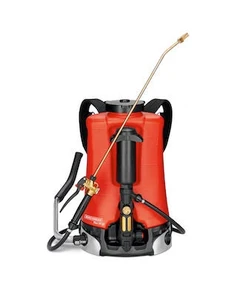
How to Use a Backpack Sprayer
Posted by Andrew Greess on Jan 2, 2026
Key Takeaways:
- Wear the PPE the product label requires, mix chemicals exactly per label, and fill the tank slowly to avoid spills.
- Manual sprayers need steady pumping to hold pressure. Battery sprayers hold pressure on their own; just set the pressure and spray.
- Rinse the tank with clean water after each job, check filters often, and keep seals lubricated for a longer sprayer life.
Backpack sprayers are one of the most useful tools in pest control, weed control, and landscaping. They carry 2.5 to 5 gallons on your back and let you treat perimeters, beds, and hard-to-reach areas without dragging a hose. They come in two types:
- Manual (pump) backpack sprayers build pressure as you pump a handle. They're simple, durable, and have no battery to charge.
- Battery (electric) backpack sprayers use a battery-powered pump to hold steady pressure with no pumping.
Here's how to use either type, and how to care for it so it lasts for years.
1. Start With a Professional-Grade Sprayer
Choosing the right pest control backpack sprayer matters. Professional-grade sprayers from brands like Birchmeier and FlowZone are built to hold up to daily use, and replacement parts are easy to get. Birchmeier backpack sprayers are known for lasting a decade or more with basic care.
2. Assemble the Sprayer
If your sprayer isn't fully assembled, put it together first. Make sure all parts are there and properly connected, especially the wand, hose, and nozzle. Instructions vary by manufacturer, so read them before your first use. For battery sprayers, charge the battery fully before the first job.
3. Prepare the Chemical
Read the product label and mix exactly as directed, including how much water to use. Wear the protective gear the label requires, typically gloves and eye protection at minimum.
4. Fill the Tank Slowly
Open the tank and pour the mixture in slowly, using the strainer in the fill opening, to avoid splashing and spills. Don't overfill. Close the lid tightly.
5. Put the Sprayer On and Adjust the Straps
Lift the sprayer onto your back so it sits evenly, then tighten the shoulder straps, and the waist belt if it has one, so it rides snug and doesn't shift as you walk. A well-fitted sprayer is much easier on your back over a full day.
6. Build or Set Your Pressure
Manual sprayers: Pump the handle with smooth, full strokes until you feel resistance and pressure builds. As you spray, keep pumping with a steady rhythm to hold consistent pressure. Uneven pumping means uneven output.
Battery sprayers: Turn the sprayer on and select your pressure setting. The pump holds that pressure for you, so you can focus on your application. Lower settings give more control and less drift, and higher settings give more reach.
7. Spray Evenly
Pull the trigger and move the wand at a steady pace, overlapping passes slightly so there are no skips. Adjust the nozzle to a pinstream for cracks and crevices, or a fan or cone for broader coverage. Watch for drift and avoid spraying in wind.
Taking Care of Your Backpack Sprayer
Follow the manufacturer's care instructions, and build these habits:
- Rinse the tank, hose, and wand with clean water after every job. Never leave chemical sitting in the sprayer.
- Check and clean the filters in the lid, the handle, and the wand.
- Don't over-pressurize a manual sprayer. It wears seals and can damage the tank.
- Keep seals and O-rings lubricated, and replace worn ones with a repair kit before they leak.
- For battery sprayers, store the battery charged and out of extreme heat.
- Practice preventative maintenance.
Shopping for a new sprayer? Compare battery and manual models side by side on our backpack sprayers page. Have questions? Contact us or call 602-371-1993.